 Anthony Newman is a mathematician and chartered engineer with over two decades’ experience in AI. He’s worked in diverse sectors, from military research and international retail to medtech and F1. For the past decade, he’s specialised in developing intelligent data product strategies for organisations that prioritise measurable outcomes.
Anthony is a member of the Project Data Analytics Task Force, a cross-industry body providing thought leadership. As an autistic professional, Ant harnesses his different perspectives to problem-solving and, especially, pattern recognition.
In this post, Anthony Newman explores the limitations of the standard workplace approach to productivity. Current systems – such as the 9-5 working day and open-plan offices – are based on long-outdated industrial operations that hinder the needs of the modern workforce. As Anthony explains, they’re especially damaging for neurodivergent employees.
Meanwhile, the progressive organisations that embrace neurodivergent-friendly productivity models have gained a distinct competitive advantage:
What if our entire understanding of productivity is fundamentally flawed?
Right now, I am in the UK. It’s 4am on a Saturday morning, and I’m about to start writing this article. Does this seem unusual to you?
For me, it’s normal. My normal. Last night I went to bed at 10pm, exhausted from my week. I awoke at 2am, chatted with my partner Sharòn in the USA, and now she’s heading to bed whilst I grab a cup of tea and start writing.
For many others, there are countless different ‘normals’ that jar with majority perception. But when these rhythms collide with workplace expectations, we often punish excellence whilst rewarding conformity.
Several years ago, my best data scientist never seemed to do any work at the office. They’d range from doing nothing to playing games, but come sprint end: boom! Fantastic work, delivered flawlessly.
This was before discussing neurodiversity became career-safe. It took my open admission of being autistic before they felt safe to share that they were also neuro-spicy, with crippling social anxiety. Monday mornings were torture.
‘Ant, when someone asks how my weekend was, how do I know when to say “Fine, thanks” versus when to engage more?’ They’d recently treated a colleague’s announcement of a personal tragedy like small talk. They didn’t intend to be dismissive and were aghast at and confused by the upset that resulted.
This higher anxiety was suddenly too much for them. I suggested a working holiday in Thailand. They found an isolated beach hut with good WiFi and finished their twoweek sprint in under four days, then asked for more work. My best data scientist had just become 150% more productive. They soon left permanently to work from beaches worldwide and remained my most productive team member.
This story illustrates a broader pattern. The productivity systems that failed my colleague aren’t unique to one company; they’re embedded in how we’ve constructed modern work itself. This is the contradiction at the heart of modern productivity culture: we’ve built systems that reward the appearance of productivity whilst often punishing the actual thing itself.
Here’s the thing: the productivity assumptions that govern modern workplaces aren’t natural laws; they’re historical accidents we’ve mistaken for universal truths. To understand why our current systems feel broken, we need to trace their origins back to a world that no longer exists.
The 9-to-5 schedule emerged from 19th-century factory work, designed around machinery that needed consistent operation and workers whose output could be measured by hours at a station. Factory owners needed bodies present to operate equipment during specific hours. This made perfect sense when human labour was mechanical: pull a lever, turn a wheel, monitor a gauge. Physical presence directly correlated with productive output. Simple.
And here’s where it starts to get a bit surreal… The obsession with immediate email responses mimics the industrial telegraph system, where rapid communication was genuinely time-critical. When factories coordinated shipments across continents, or traders needed to capitalise on price differences between markets, minutes mattered.
The person who could respond fastest to changing conditions gained a competitive advantage. This urgency became embedded in the infrastructure of commerce. There are still situations like this, of course, but it’s really not every situation.
It gets worse. Open-plan offices were borrowed from factory floors, optimised for supervision rather than deep thinking. Managers needed to see their workers to ensure they were operating machinery correctly and safely. The visual oversight that prevented industrial accidents became the template for knowledge work, despite thinking requiring privacy rather than surveillance. Brilliant.
Even our promotion structures follow manufacturing hierarchies, where managing more people meant managing more machines. The supervisor who oversaw ten workers was naturally more valuable than one who oversaw five. This linear progression from individual contributor to people manager reflected industrial reality: more complex operations required more coordination.
We’ve inherited this entire industrial operating system and installed it onto knowledge work, then wondered why it feels broken. But knowledge work operates on completely different principles. Ideas don’t flow on assembly lines. Innovation doesn’t happen on schedule. Creative breakthroughs can’t be supervised into existence. It’s like trying to run modern software on a 1950s computer.
Complex problem-solving requires sustained focus, not fragmented attention across eight hourly intervals. Yet here we are, still pretending that watching people type equals productivity.
The tragedy is that we’ve clung to these systems long after their original purpose disappeared. We no longer coordinate physical machinery or manage telegraph networks, yet we’ve preserved the work patterns these technologies demanded. It’s as if we decided that because horses were once the fastest form of transport, all cars should be limited to the speed of a galloping horse. [Insert brain exploding emoji in your mind.]
This industrial inheritance explains why so many brilliant minds struggle in modern workplaces. We’re not failing at industrial productivity, we’re succeeding at it whilst pretending we’re doing knowledge work. The systems aren’t broken; they’re perfectly designed for a world that mostly no longer exists. The problem in a nutshell.
THE HIDDEN CASUALTIES: WHEN DIFFERENT MEANS ‘BROKEN’The human cost of our industrial inheritance isn’t distributed equally. Those whose minds work differently bear the heaviest burden, creating predictable casualties that reveal the true inefficiency of our ‘onesize-fits-all’ systems.
The numbers alone should shock us into action. Neurodivergent adults face unemployment rates of 30-40%, three times higher than people with physical disabilities and eight times higher than the general population. These statistics aren’t about capability or potential. They’re measurements of systemic failure.
The mismatch between neurotypical workplace demands and neurodivergent brains creates predictable casualties. Employees with ADHD experience ‘hyperfocus burnout’ where their natural rhythm of intense focus periods followed by recovery clashes with expectations of consistent eight-hour daily productivity. Research documents cases where individuals can only work 20 hours a week for years after burnout episodes, remaining highly sensitive to work stress. The prevalence of clinically significant fatigue is around 18% in the general population but as high as 54% among adults with ADHD.

Autistic employees face different but equally damaging challenges. Those who need processing time before meetings get labelled ‘slow’ or ‘difficult’ in cultures that value immediate responses. The workplace environment itself becomes an assault: fluorescent lighting, ringing phones, open-plan chatter. Sensory stimulation overwhelms, and if not regulated by the individual, can cause shutdowns where they become unresponsive or need to retreat, often misunderstood as rudeness or disengagement.
Even today, a third of neurodivergent people feel they can’t disclose their condition at work, and 10% have been met with poor responses when they do. We learn to ‘mask,’ exhausting ourselves by performing palatably for eight hours daily. The cognitive load of constant camouflage leaves us depleted, affecting performance and mental health.
The cascade effects are devastating. Time blindness makes it difficult for ADHD employees to estimate how long tasks will take, leading to overcommitment and subsequent shame cycles. Executive function deficits contribute to emotional exhaustion, cognitive weariness, and physical fatigue, key components of job burnout. The ‘broken’ narrative becomes self-fulfilling. Intelligent, capable people start believing they’re fundamentally flawed because they can’t succeed in systems designed for different brains.
Many compensate by working evenings and weekends to perform on par with colleagues, leading to chronic stress and occupational burnout. They internalise failure that isn’t theirs, accepting underemployment or leaving careers entirely. Despite job postings mentioning neurodiversity keywords tripling from 0.5% to 1.3% between 2018 and 2024, only 29% of senior leaders have received any neurodiversity training. We’re creating the appearance of inclusion whilst maintaining exclusionary practices.
This isn’t just an individual tragedy, it’s organisational stupidity. Research shows that autistic professionals can be up to 140% more productive than average employees when properly matched to roles that fit their skills. Yet we’re systematically excluding them, then wondering why innovation stagnates and talent pipelines remain shallow. We’re not failing to accommodate difference; we’re actively punishing excellence that doesn’t conform to outdated templates.
Rather than forcing square pegs into round holes, what if we redesigned the holes? The neurodivergentfriendly productivity models emerging across innovative workplaces aren’t just more humane, they’re more effective for everyone. They represent a fundamental shift from measuring compliance to optimising performance.
Instead of demanding consistent daily output, forward-thinking organisations recognise that human attention has natural rhythms. Some companies now structure projects around ‘seasonal’ intensities, periods of deep focus followed by lighter maintenance work. This mirrors how ADHD brains naturally operate, with hyperfocus sprints followed by necessary recovery. Instead of fighting these patterns, smart managers harness them, scheduling complex problem-solving during peak attention periods whilst using lower-energy times for routine tasks.
The traditional eight-hour day fragmented by meetings and interruptions is productivity theatre at its worst. Alternative models prioritise deep work blocks, three to four-hour periods of uninterrupted focus that allow for meaningful progress. For neurodivergent employees who can hyperfocus, these blocks become supercharged productivity sessions. One software company found that developers produced more high-quality code in a single deep work session than in three days of traditional ‘collaborative’ work.
The tyranny of immediate response expectations crumbles when organisations embrace asynchronous communication. Instead of instant Teams replies, teams use thoughtful email/Teams exchanges, some recorded video updates, and most collaborative documents that allow for processing time. This isn’t slower, it’s more thoughtful. Decisions improve when people can reflect rather than react. Autistic employees who need time to formulate responses might suddenly become the most insightful contributors rather than the ‘slow’ ones.
Open-plan offices are productivity killers for everyone, but especially devastating for those with sensory sensitivities. Innovative workplaces provide choice: quiet focus rooms, collaboration spaces, and everything in between. Noisecancelling headphones become standard equipment, not special accommodations. Natural lighting replaces harsh fluorescents. These changes don’t just help neurodivergent employees; they create calmer, more productive environments for all.
Traditional success metrics assume linear progression, consistent performance, and standardised achievement patterns. But breakthrough innovations rarely emerge from fast thinking; they come from deep thinking. When someone takes three days to respond to a complex proposal, we label them ‘slow.’ When that response reveals strategic insights others missed and prevents costly mistakes, suddenly the speed metric seems irrelevant.
The most valuable contributions often happen in solitude, the deep analysis, the creative breakthrough, and the systematic debugging that requires uninterrupted focus. While others tick boxes on to-do lists, some minds naturally see entire ecosystems, spotting patterns across departments and identifying unintended consequences before they manifest. The employee who questions the project brief might seem ‘difficult,’ but if they prevent six months of work in the wrong direction, they’ve created more value than the entire team’s collective output.
Success becomes multidimensional: impact over income, sustainability over speed, authenticity over performance. The question changes from ‘How quickly can you climb?’ to ‘What unique value can you create?’ When we measure what actually matters, different kinds of minds don’t just succeed – they redefine what success means.
These aren’t ‘special accommodations’; they are optimal working conditions that neurotypical assumptions have obscured. When we design for neurodivergent needs, we accidentally create better systems for everyone. Quiet spaces help all employees focus. Flexible schedules accommodate working parents and night owls alike. Deep work blocks benefit anyone doing complex thinking. What appears to be accommodation for the few actually optimises performance for the many.
The business case for neurodiversity isn’t theoretical; it’s measurable, repeatable, and a competitive advantage. Leading companies aren’t embracing neurodivergent talent out of charity; they’re doing it because it delivers superior results. The numbers don’t lie.
Microsoft’s Neurodiversity Programme, celebrating its 10th anniversary in 2025, has expanded from software engineering to AI, Azure, Windows, Xbox, finance, customer support, and marketing. In 2024, they expanded to data centres nationwide. This isn’t accommodation, it’s systematic competitive advantage through cognitive diversity. They’re not being nice. They’re being smart.
SAP’s Autism at Work programme employs over 215 individuals across 16 countries, with neurodivergent team members demonstrating 90% to 140% productivity relative to peers. The programme maintains a 90% retention rate whilst colleagues on the autism spectrum significantly contribute to patent applications and innovations across SAP’s product portfolio. That’s not charity work. That’s pure business brilliance.
JPMorgan Chase’s results are stark: neurodivergent employees were 48% more productive within six months compared to established colleagues. In tech roles, they demonstrate 90% to 140% comparative productivity, clearing work queues with zero errors. Teams including neurodivergent members produce 1.2x to 1.4x the output of traditional teams. These aren’t feelgood statistics. They’re performance metrics that would make any CFO weep with joy.
The pandemic proved what neurodivergent employees had long argued: when you remove environmental barriers and provide flexibility, productivity soars for everyone. EY more than tripled its neurodivergent workforce from 80 to nearly 300 employees during this period. What COVID proved was that the accommodations neurodivergent employees requested – flexible schedules, remote work, and asynchronous communication – weren’t special needs. There were better ways of working that improved performance across the board. Suddenly, everyone got it.
Companies embracing neurodiversity don’t just hire different people; they build better processes, create more flexible systems, and develop thoughtful management practices benefiting everyone. The cost savings from retention rates alone continue to save money and time. This isn’t about corporate social responsibility; it’s about competitive survival. And frankly, it’s about time.
The evidence is overwhelming: neurodivergentfriendly practices don’t just help some employees, they optimise performance for everyone. The question isn’t whether to embrace this shift, but how quickly we can make it happen.
Stop apologising for working differently. Instead, lead with value. Document your productivity patterns, when you do your best work, what conditions enable peak performance, and what measurable results you deliver. Build a portfolio of your unique contributions rather than trying to fit neurotypical templates. When negotiating accommodations, frame them as productivity optimisations. Don’t ask for ‘special treatment’, propose performance enhancements. Request deep work blocks for complex projects, asynchronous communication for thoughtful contributions, or flexible schedules aligned with your peak cognitive hours. Present these as business solutions, not personal needs.
Challenge every productivity assumption your team inherited. Question why meetings must be live, why responses must be immediate, and why everyone must work the same hours in the same space. Sometimes it’s required, sometimes it’s not. Experiment with seasonal project intensities, focus time, and results-based performance metrics.
Develop new management skills: how to give clear, direct feedback; how to distinguish between preference and necessity in team processes; how to leverage diverse thinking styles for better outcomes. Create psychological safety where different working patterns are assets, not liabilities. Environments where your employees feel safe to come forward, and you can reap the benefits.
Audit your productivity culture for neurotypical bias. Review job descriptions for unnecessary specificity, interview processes for social performance over capability, and performance metrics for conformity over contribution. Design inclusion from the ground up rather than retrofitting accommodation onto exclusionary systems.
Invest in neurodiversity training that goes beyond awareness to capability building. Partner with neurodivergent-led organisations for authentic insight rather than neurotypical interpretations of neurodivergent needs. Measure inclusion through retention, productivity, and innovation metrics, not just hiring numbers.
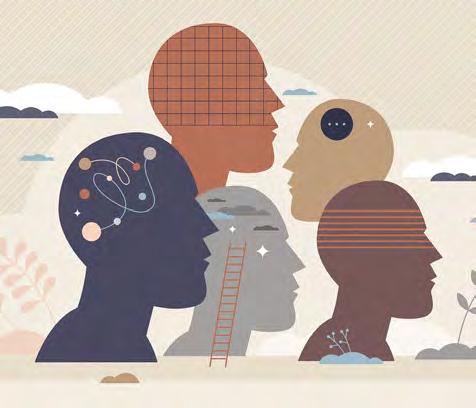
As markets become more complex and innovation cycles accelerate, organisations need every cognitive advantage available. Companies that continue optimising for neurotypical productivity theatre whilst competitors harness neurocognitive diversity will find themselves disadvantaged.
The future belongs to organisations that recognise human potential comes in many forms. By embracing the full spectrum of human cognition, we don’t just create more inclusive workplaces; we build more innovative, resilient, and ultimately successful organisations. The choice isn’t whether to change, but whether to lead or follow this inevitable transformation.
