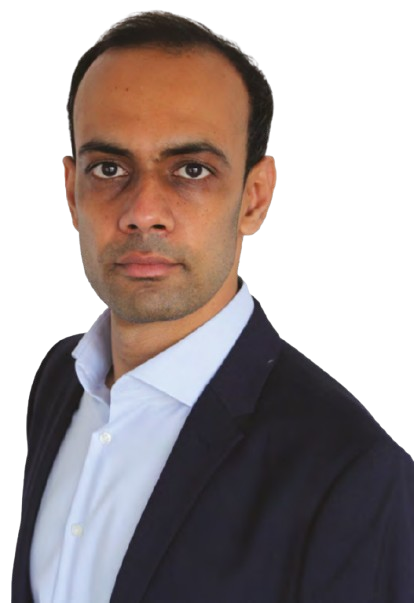
 Dr Saurabh Steixner-Kumar is a data and AI leader with a rare blend of scientific depth and industry impact. At one of the largest financial institutions in the world, he drives global analytics and machine-learning initiatives end-to-end.
With a PhD from the Max Planck Institute and a research portfolio published in Science and Nature Scientific Reports, Saurabh brings deep expertise in decision science, leadership, and stakeholder management.
For our latest post Saurabh explores AI’s role in tackling the invisible threat of money laundering. In today’s connected world it’s easier than ever to establish and conceal money laundering networks. But as Saurabh explains, AI is reshaping the landscape of transaction monitoring, and institutions are fighting back with a new generation of money laundering detection:
Money laundering is a crime built on invisibility. Unlike a bank robbery or credit card scam, there is no single dramatic act, no obvious victim, no immediate loss. It is so subtle that without checks in place, it would remain hidden forever. Criminals don’t need to create new money but only make dirty money look clean. In the contemporary world, it has become even easier and even more dangerous.
Funds from drug trafficking, corruption, cybercrime, and human trafficking are fed into the legitimate financial systems before being layered through transfers, investments, and complex transactions. These transactions are designed to obscure their origins before finally reemerging as seemingly legitimate money. It is particularly difficult to detect because of the deliberate blending of illegal funds with legitimate activity. A fraudulent transaction may be hidden among millions of routine ones, structured to appear perfectly ordinary.
Complexity is what drives the money laundering schemes. The systems designed for our modern society, like fast cross-border payments and diverse financial products, are the very mechanisms that criminals exploit. Shell companies offering various financial solutions over multiple jurisdictions make it harder to uncover the trail of money.
Cryptocurrencies have recently added another dimension to the difficulty. While digital assets promise transparency, they also enable newer money laundering schemes where the regulators and compliance teams often trail behind the criminals.
For many years, financial institutions have primarily relied on the rule-based transaction monitoring systems to spot suspicious behaviour. It is a relatively simple logic of using thresholds, which, when crossed, trigger an alert that then must be investigated by the investigation unit. This usually overwhelms the teams because of a very high number of false positives.
A money launderer may study such rules and intentionally exploit them to only transact below set thresholds. This is called smurfing, where the transactions look normal, but they are part of a bigger money laundering scheme. One must look beyond rigid systems and explore newer avenues.
Money laundering is not a victimless crime. Laundered money funds organised crime, sustains corrupt regimes, and enables terrorist financing. Every successful laundered scheme reinforces the underlying criminal activity, fuelling cycles of exploitation and violence. For financial institutions, the risks are equally severe. Failure to detect laundering exposes banks to regulatory fines, reputation damage, and potential exclusion from international markets. It’s a stark reminder that the stakes are not just moral but existential.
What makes laundering so elusive is its reliance on legitimacy itself. Unlike overt fraud, where criminals attack the system in obvious ways, laundering relies on the financial system’s everyday functions. It uses ordinary accounts, routine transactions, and lawful institutions as its camouflage. It’s challenging to preserve the speed and efficiency of global finance while ensuring it is not exploited for crime. Too much friction can stifle legitimate activity, while too little opens the door to abuse. Navigating this balance is one of the great challenges of modern compliance.
Money laundering is not static. As soon as one method is exposed, another emerges. We will be exposed to innovative money laundering schemes of the future. The constant evolution ensures that detection efforts can never stand still. The demand is to see beyond the obvious patterns. Traditional methods have laid the foundation, but they are no longer enough. We need to embrace new technology to help us in this fight against money laundering. We need to ensure that the financial systems can be fully trusted by society and that they remain a tool for growth.
Money laundering can be described as a crime without borders, and in today’s hyper-connected world, that description has never been more accurate. Illicit funds now move with the same speed and ease as legitimate funds, slipping through jurisdictions in seconds and disappearing into layers of opaque financial networks. What once required couriers with suitcases of cash can be achieved with a few keystrokes. The result is a global problem that seeps into nearly every corner of the economy, undermining governments, fuelling organised crime, distorting markets, and damaging trust in the global financial market.
If you’ve ever wondered why news headlines so often feature war, terrorism, and organised crime, it’s important to remember that none of these tragedies would be possible without money quietly moving through the global financial system. Behind every act of violence lies a trail of funds that often appear, at first glance, to be completely ordinary transactions. You might assume stopping this flow would be straightforward, but financial institutions face two immense challenges. First , detecting illicit funds is incredibly complex. Criminals constantly evolve their tactics, using sophisticated and ever-shifting methods to mask the origins of their money. Only advanced analytics and modern technology can keep pace with such professionalised networks. Second , banks must operate efficiently and competitively. They’re expected to balance strong anti-financial crime efforts with the realities of running a business, which naturally shapes the level of ambition they can commit to. Traditional monitoring systems have been the industry standard for years, even though their limitations are widely recognised. Transforming this landscape can feel like fighting on several fronts at once. But the potential impact is enormous. By shifting from a mindset of simply meeting requirements to one of embracing what is truly possible with today’s technology, we open the door to saving countless lives. That goal makes every step of progress not only worthwhile but essential.
Shell companies are a cornerstone of money laundering networks. Easy to establish and often registered in tax havens, these paper entities typically have no employees, offices, or genuine operations. Their sole function is to obscure ownership and control of funds. By layering transactions across multiple shell companies in different jurisdictions, launderers create a trail so convoluted it can take years for investigators to follow. Some countries have introduced beneficial ownership registries to bring transparency, but enforcement is inconsistent, and secrecy continues to be a selling point in many of these financial hubs.
The digital age has only widened the playing field. Online gambling platforms allow criminals to deposit illicit funds, place minimal bets, and withdraw the balance as clean money. Cryptocurrencies and blockchain-based assets present an even more complex challenge. While blockchains are transparent in theory, the pseudonymous nature of digital wallets, combined with mixing services and decentralised exchanges, can make tracing transactions extremely difficult. Regulators face a delicate balancing act of encouraging financial innovation without losing control.
The stakes extend far beyond financial misconduct. Laundered money doesn’t just shelter the profits of drug cartels and corrupt officials, but it also fuels human trafficking and terrorism. Traffickers use intricate financial networks to mask the funds earned from exploiting vulnerable people, routing money through informal transfer systems, cash-heavy businesses, and global banks. Terrorist groups, meanwhile, depend on laundering to fund operations, purchase weapons, and recruit followers, often hiding flows behind charities or digital currencies. In both cases, laundering provides the lifeblood that sustains industries of exploitation and violence.
What makes money laundering particularly difficult to combat is the way it adapts to every attempt at enforcement. Stricter banking regulations in one region often push illicit flows to less-regulated markets elsewhere. This means that money laundering does not disappear but merely shifts shape and location. Furthermore, the integration of the global financial system means that weaknesses in one jurisdiction can have a snowball effect worldwide.
Governments and institutions are fighting back. The Financial Action Task Force (FATF) has set international standards on anti-money laundering (AML), urging countries to harmonise their rules and cooperate more closely. Banks and regulators are increasingly deploying artificial intelligence and advanced analytics to detect unusual patterns hidden in transactions. But criminals are agile, often moving faster than regulators can respond.
Ultimately, tackling money laundering requires a combination of global coordination, technological innovation, and political will. Transparency in ownership structures, stronger cross-border cooperation, and accountability in both public and private sectors are essential. Money laundering may be a crime without borders, but that does not mean it is unstoppable.
The most traditional and trusted way of detecting money laundering in banks and financial institutions is the rule-based monitoring methods. These are the basic tools that are straightforward, transparent, and loved by the compliance departments. There is a very good reason that these methods exist, as these are simple to implement and at the same time easy to explain. There is a clear set of thresholds and scores that define the reasoning behind any suspected transaction. Some examples could be large cash deposits, transfers to high-risk areas, or an unusually high number of transactions.
Simplicity, although it is a sought-after trait, because it means that the regulators are at peace, also results in complacency. If banks want to be ahead of the criminals, they need to be flexible in their approach. They have to look beyond the simplified assumptions of rule-based systems and evolve. They need to move quickly before the criminals can find newer ways to evade the police. A smart criminal may use certain unknown patterns to move money before new rules can be set up to detect it. It’s a hide-andseek game, where the seeker is only looking in places where the hider was found before, unaware of the evolution of the playing field.
There is also the burden of maintaining a large team of investigators with the traditional approaches, because

these methods generate an extremely large number of false positives. This is well understood by the example of a legitimate customer who has had a new business client and therefore suddenly deals with a larger number of transactions or transactions in foreign currency. Or another legitimate customer who has had a major change in lifestyle due to marriage or having children, and suddenly has a different transaction pattern. In both these examples, the customers may be flagged, and investigators will have to use their already limited time to file and close these legitimate cases. Such a system is not only inefficient but also introduces fatigue, where the investigators become desensitised and overlook potentially genuine cases.
It is a well-known fact that a vast number of alerts generated by the rule-based systems are false positives; however, a manual investigation into these is what keeps the financial system running with well-known caveats. This is still by far the most standard way around the world, which, although draining financially and on the individuals, is accepted by the regulators. The once-advanced system is showing its age due to the changing environment. We have several new advanced financial offerings in the form of new digital platforms and cryptocurrency exchanges, which generate activities that are too subtle and too complex for the rule-based methods to detect.
The transaction monitoring field is also evolving thanks to recent technological developments. There is more research in dynamic and intelligence-driven tools like machine learning and artificial intelligence. There are smarter and more efficient ways that are in use and in development to detect suspicious behaviour of criminals. It should be seen as a necessary and natural evolution of the blunt tools from the past to the newer and sharper tools of the present and future. In retrospect, the rule-based systems form an essential starting and base point from which we build the solutions of the future to assist the fight against money laundering.
The rise of AI (artificial intelligence) and data science may be seen as a new phenomenon, but the field has existed for a long time and has been hiding in plain sight behind the more traditional concepts of psychology, statistics, and computer science. Slowly but steadily, it is reshaping the landscape of transaction monitoring, not only from the technological point of view, but also from a philosophical one. We are no longer simply looking at some definitions from the textbooks, but rather exploring hidden patterns. We are looking at recognising the context, intent, and other sophisticated reasoning that may point to criminal behaviour.
At the core of the new generation of money laundering detection are several key techniques that are transforming the financial industry.
Anomaly detection can be considered as the very basic kind of monitoring within the AI-driven tools. I like to compare it with the concept of personalisation, where a certain routine behaviour of a customer is considered normal, and anything that is out of the ordinary of this personalised bubble is a cause of concern.
Conceptually, every customer forms a unique profile, and this is constantly adapting to the change in behaviour within a certain limit. The power of this method lies in its adaptability, as it is capable of understanding the subtle signs of a shift in behaviour. The goal is not to remove the false negatives but rather to reduce the noise significantly and allow the investigators to put effort into more meaningful alerts.
Predictive analytics is a different way of looking at the problem. Where the traditional way of detecting money laundering is to detect it within the transaction behaviour after it has already taken place, predictive analytics tries to identify it before it occurs. I like to think of the movie Minority Report , where the idea is to look for signs and make a conclusive prediction of crime and potentially stop it.
Looking at the historical patterns of transactions and other metadata like demographic information and general behaviour, certain AI models can identify some signs of risk. Taking the movie example, if a person who has never held a gun is lifting and pointing a gun towards someone with anger on his face and a potential motive, it is safe to predict that he might shoot. Such a sign should be alerted for investigation.
Such predictions can not only help in identifying crime but also support the resource allocation that can then be based on the risk profiles. Prioritisation and categorisation of the investigations can be the difference between catching the criminal and letting him slip through the mountain of false alerts.
Entities involved in money laundering do not just use one instrument within one institution, but a large and complicated network to hide the trails. This may involve using differently spelled names and multiple accounts and transaction routes, to name a few that are hard to link together. Entity resolution aims to link all the fragmented pieces together to form a complete picture so that they can judge the transactions.
The technique can involve using linking and mapping tools to view the network of entities and unravel the broader behavioural pattern. Such a sophisticated mechanism is only possible with the AI-driven approach and could not be captured with the static rulebased algorithms.
Transaction monitoring has moved far beyond simple transfers of amounts in numbers. It also exists within the subtle descriptions that form these transactions. There can also be unstructured forms of information from media and public activities. Human language is a complex thing to comprehend for computers, and the modern tools are now able to look deeper into these messages where the previous approaches could not.
Natural language processing is able to demystify the messages that follow transactions and may be able to generate alerts based on risk. Not only that, but the procedures of knowing the customer and regular screenings are also boosted with these new techniques and play their part in fighting money laundering.
It is crucial to note that the advancement in technology should be seen as a new development in sharpening the tools that we have at our disposal to fight money laundering. The objective of using new technology is not to replace humans or their expert judgment in detecting wrongdoing, but rather to make them better equipped to do the job more reliably and efficiently than ever before.
Such an approach is not only putting more trust in our financial systems, which is extremely important for our society to run, but also giving a sure sign to criminals that it is increasingly difficult to get away. From the regulators’ point of view as well, embracing technology to better the skills of detecting money laundering is not only a luxury but a necessity.
AI, over the past few years, has captured everyone’s imagination for the right reasons, but there are also some misconceptions. It’s a philosophical question to tag something intelligent, and one that I do not aim to answer in this article. However, basic facts can help us to understand the AI systems better and get the most out of them. There is no doubt that the advancements in the field have made the task of catching the suspicious transactions much more feasible, but the decision-making power of AI should not be seen as the ultimate truth. These systems, as promising as they seem, do suffer from many challenges. The systems are reliant on the quality and quantity of data that is presented to them, and that is one of the main obstacles, in addition to their adoption and acceptance within the industry.
One may have the most advanced models, but their results may be skewed if the supplied data is not accurate, comprehensive, and consistent. As it turns out, the financial transaction data is very fragmented, and even after many efforts to clean and complete it, there are many irregularities. Additionally, systems change over time, and there is a need to consolidate the data from the past to the present, legacy to strategic systems. Often, onboarding the data to be used by the new advanced system also leads to inconsistencies, which can then form a snowball effect affecting not only the present systems, but also systems of the future.
The scale of data also makes the task extremely difficult. The modern financial solutions generate a much larger amount of data, and the systems need to adapt to the increased load. Sure, the AI systems can help here, but they still require human intervention. The burden of governance, with all the challenges combined, can amplify the risks of misguided decisions. Therefore, rigorous data controls are an absolute necessity.
The absence of the actual ground truth is an unsolvable problem. In the traditional supervised machine learning models, one could improve predictions by comparing the results to the correct answer; however, in the search for suspicious transactions, this is the big unknown.
Suspicious activity reports (SARs), for example, do not always confirm criminal activity; they merely reflect suspicion. Any system based only on the reproduction of SARs can merely form a feedback reinforcing biases introduced by human investigators rather than the objective truth.
It’s a double-edged sword where one cannot increase the number of false positives to catch everything suspicious as it means increasing the resources and draining the institutions, and at the same time, cannot also increase the number of false negatives as it means the institution is posing a financial risk and risking its reputation. Striking the right balance is a very complex task that can only be bettered with iterations, as there is no real benchmark to rely on.
In the financial industry, there are always checks and balances, and the same is true for the AI systems. Regulations demand explanations and clarifications for all the processes and outcomes, and the institutions should be able to reliably explain them. This is a great challenge as many of the advanced systems work in their black boxes, and it presents a significant challenge in terms of time and effort to justify and unravel these boxes. Just because a model outputs something does not mean that the regulator may accept it.
There are XAI (explainable AI) techniques used for such activities. The idea behind them is to point out the features within the model that influence the decisions in terms of importance. The goal is to increase the transparency of the model and strike a right balance with the regulatory body in terms of effectiveness and explainability. More work needs to be put into such symbiotic activities.
Success depends on combining machine intelligence with human judgement, and innovation with accountability.
The balance between innovation and accountability is a tricky one. The financial institutions are put under pressure by the regulatory bodies to make sure all the appropriate models are in place to catch suspicious activities, but at the same time ensure transparency and explainability. On the other hand, the institutions also need to embrace the most cutting-edge AI techniques to keep pace and catch any suspicious activity while maintaining legitimacy.
The solution lies in the governance frameworks that balance innovation and oversight. It’s beyond the AI models and into data management, auditing infrastructure, and investigations. It’s a clear call for collaboration between the teams that traditionally sat in individual silos.
AI-powered transaction monitoring is not a silver bullet. It is a powerful tool, but one that must be handled with care. The challenges of data quality, uncertain ground truth, false positives, and explainability are not roadblocks but checkpoints. It serves as a reminder that technology alone cannot solve financial crime. Success depends on combining machine intelligence with human judgement, and innovation with accountability.
As criminals evolve their tactics, the institutions will need to keep up the pace to maintain their reputation and public trust. The future of transaction monitoring will be shaped not just by how smart AI techniques become, but by how responsibly it is managed.
LOOKING AHEAD: THE FUTURE OF TRANSACTION MONITORINGTransaction monitoring is evolving into a race between the criminals and the technology that is used to catch such activities, and is no longer just about meeting the compliance requirements. The upcoming phase of innovation by the major financial institutions will define and shape their future.
Blockchain is a great tool in the eyes of the compliance teams, as it is a technology that cannot be altered once recorded and gives transparency. Regulators can follow the recorded flow of funds across the borders and investigate the truth. However, there are legitimate concerns of privacy in public blockchains and confidentiality in private ones. There is more work to be done to combine AI with blockchain.
The complex ways the money moves make it hard to detect with traditional AI methods. To understand the complexity of such networks, advanced neural networks and reinforcement learning can be used. Such models can process diverse data such as structures, descriptions, and network relationships to uncover patterns too subtle for simpler methods. However, the caveat is that the more advanced the model becomes, the harder it is to explain.
Perhaps the most transformative innovation is dynamic risk scoring. Today, customer risk ratings are typically static, assigned at onboarding and updated only occasionally. But financial behaviour changes constantly, and static scores can quickly become outdated.
Dynamic scoring can calculate the risk on an ongoing basis based on real-time data. If the customer is suddenly involved in higher-risk transactions, then the risk profile could be updated so that investigators can adapt and act quickly. This has the advantage of faster reaction times to catch suspicious activities.
The future of transaction monitoring will be defined by resilience. Financial crime in terms of money laundering will keep on adapting to the newer globalised financial environment, and therefore, the technology of blockchain, deep learning, reinforcement learning, and dynamic scoring should not be seen as final solutions but rather as stepping stones to the ever-evolving technology landscape.
What’s clear is that static, rule-based monitoring is no longer enough. The future belongs to systems that learn, anticipate, and connect the dots faster than criminals can exploit them. In that future, institutions won’t just react to suspicious activity, but also predict and prevent it.
AI is not just enhancing transaction monitoring, it is redefining it. For financial institutions, regulators, and data scientists alike, this evolution offers both opportunity and responsibility in the ongoing battle against financial crime.
“What’s clear is that static, rule-based monitoring is no longer enough. The future belongs to systems that learn, anticipate, and connect the dots faster than criminals can exploit them.”
