 Nicole Janeway Bills is the Founder & CEO of Data Strategy Professionals. She has a proven track record of applying data strategy and related disciplines to solve clients’ challenges, and has worked as a data scientist and project manager for federal and commercial consulting teams. Nicole’s specialisms include NLP, cloud computing, statistical testing and web and application development.
In our latest post, Nicole gives us a run-down of the most important books about data governance and data management. With practical solutions for key issues including change management, data implementation and enterprise information strategy, these books are essential reading for data leaders:
These book recommendations centre on data governance, data management, and the people behind successful data programs. From change management and C-suite leadership to hands-on implementation and enterprise information strategy, these selections reflect the continued demand for structure that works in real organisations. The reading list reflects a continued shift toward treating data and information as true business assets, supported by people, process, and accountability.
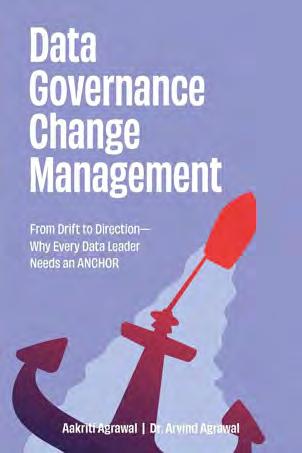
1. DATA GOVERNANCE CHANGE MANAGEMENT: FROM DRIFT TO DIRECTION — WHY EVERY DATA LEADER NEEDS AN ANCHOR
Author: Aakriti Agrawal and Dr Arvind Agrawal
Time to read: 7 hrs 10 mins (215 pages)
Rating: 5/5 (9 total ratings)
This book focuses on the human side of data governance by showing how change management can make or break a program. The authors introduce the Aim, Need, Community, Hooray, Obstacles, and Resilience (ANCHOR) framework as a practical path for building trust, reducing resistance, and helping teams shift from inconsistent data habits to intentional practice. Through relatable scenarios and clear guidance, the book highlights how leaders can align behaviour, expectations, and communication to support long-term adoption of governance. It is especially helpful for organisations that already have the right tools but struggle with team engagement or cultural readiness.
TL;DR: A people-first guide to data governance adoption that uses the ANCHOR framework to help leaders build trust, reduce resistance, and drive consistent data behaviour across the organisation.
2. THE CHIEF DATA OFFICER HANDBOOK FOR DATA GOVERNANCEAuthor: Sunil Soares
Time to read: 2 hrs 40 mins (80 pages)
Rating: 4/5 (152 total ratings)
Sunil Soares offers a practical playbook for chief data officers (CDOs) who need to define, launch, and operationalise data governance programs. The book breaks down the core components of governance – from policy development to stewardship models – and pairs them with templates, examples, and repeatable steps. Soares draws from years of working with large enterprises, making the guidance both scalable and grounded in real-world challenges. It serves as a strong reference for new CDOs and experienced leaders who want structure and clarity in how they govern data.
TL;DR: A hands-on handbook that gives CDOs clear guidance to stand up and scale data governance across complex organisations.

3. DATA GOVERNANCE: HOW TO DESIGN, DEPLOY, AND SUSTAIN AN EFFECTIVE DATA GOVERNANCE PROGRAM
Author: John Ladley
Time to read: 11 hrs 40 min (350 pages)
Rating: 4.5/5 (147 total ratings)
John Ladley delivers a comprehensive guide to building data governance programs that work across business and technology teams. He explains the foundational concepts, decision rights, and operating models needed to support governance at scale. The book stands out for its balance of strategy and practical execution, showing how to embed governance into daily workflow rather than treat it as a separate initiative. Ladley also addresses common barriers – from unclear roles to poor communication – and provides tools to help leaders maintain momentum after the initial launch.
TL;DR: A complete blueprint for designing and sustaining data governance, combining clear concepts with practical steps that help teams turn policy into daily practice.

4. THE DATA MANAGEMENT TOOLKIT: A STEP-BY-STEP IMPLEMENTATION GUIDE FOR THE PIONEERS OF DATA MANAGEMENT
Author: Irina Steenbeek
Time to read: 7 hrs 12 min (216 pages)
Rating: 4.5/5 (22 total ratings)
Irina Steenbeek presents a structured approach to building repeatable data management processes. Her toolkit breaks complex data functions into manageable components and offers step-by-step instructions that help teams move from high-level strategy to operational detail. The book is especially valuable for organisations starting from scratch or formalising early data efforts. With real-world examples, Steenbeek helps data management leads create a program that is both scalable and sustainable.
TL;DR: A step-by-step guide that helps data management practitioners turn strategy into actionable processes through structure and repeatable methods.

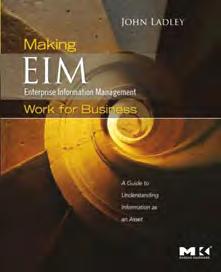
5. MAKING ENTERPRISE INFORMATION MANAGEMENT (EIM) WORK FOR BUSINESS: A GUIDE TO UNDERSTANDING INFORMATION AS AN ASSET
Author: John Ladley
Time to read: 18 hrs 24 mins (552 pages)
Rating: 4.4/5 (23 total ratings)
In this foundational work, John Ladley explains how organisations can treat information as a true business asset rather than a technical afterthought. The book outlines how enterprise information management (EIM) ties together governance, architecture, quality, and analytics to support enterprise goals. Ladley uses practical examples to show how better information practices improve decision-making, reduce risk, and strengthen operational performance. For leaders navigating broad data and information challenges, this book offers a clear framework for aligning people, process, and technology.
TL;DR: A practical guide that shows how to treat information as a business asset by aligning EIM with governance, architecture, and organisational goals.
6. QUIET: THE POWER OF INTROVERTS IN A WORLD THAT CAN’T STOP TALKING
Author: Susan Cain
Time to read: 12 hrs 16 min (368 pages)
Rating: 4.5/5 (35,021 total ratings)
Susan Cain explores the strengths introverts bring to work, leadership, and everyday life. Through research and personal stories, she highlights how introverts contribute through deep thinking, careful planning, and intense listening. The book challenges the assumption that extroversion is the ideal and encourages organisations to create environments where both personality types can thrive. It is a helpful read for professionals who want to better understand how temperament shapes collaboration and performance.
TL;DR: A thoughtful look at the strengths of introverts and how organisations can create environments that support different working styles.

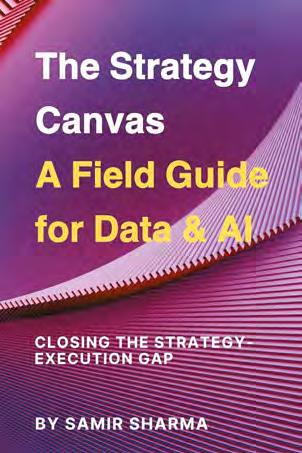
7. THE STRATEGY CANVAS A FIELD GUIDE FOR DATA & AI: CLOSING THE STRATEGY-EXECUTION GAP
Author: Samir Sharma
Time to read: 5 hrs 38 min (169 pages)
Rating: new release
Samir Sharma focuses on one of the most common challenges in data strategy: turning plans into real execution. The book introduces the Strategy Canvas as a practical working tool that helps teams connect business goals with data architecture, data governance, and delivery priorities. Rather than staying at a high level, Sharma walks readers through mapping decisions, dependencies, and outcomes in a way that keeps strategy grounded in daily work. The book is well-suited for leaders who struggle with misalignment between vision and what teams actually build.
TL;DR: A practical field guide that helps teams close the gap between data strategy and execution using a clear, hands-on framework that connects goals to delivery.
These book selections reflect the core realities of modern data leadership: guiding change, creating structure, and sustaining accountability across the organisation. Data Governance Change Management emphasises trust and behaviour as the foundation for adoption. T he Chief Data Officer Handbook for Data Governance and John Ladley’s Data Governance and EIM works provide clear models for building durable programs. The Data Management Toolkit supports hands-on execution through practical steps. Quiet reinforces that leadership style and temperament shape how data programs succeed in real teams. This collection offers clear direction for leaders working to strengthen data governance and data management in active, complex environments.
