 Anthony Alcaraz is Chief AI Officer at Fribl, a company dedicated to automating HR processes. Anthony is also a consultant for startups, where his expertise in decision science, particularly at the intersection of LLMs, natural language processing, knowledge graphs, and graph theory is applied to foster innovation and strategic development.
Anthony is a leading voice in the construction of retrieval-augmented generation (RAG) and reasoning engines. He’s an avid writer, sharing daily insights on AI applications in business and decision-making with his 30,000+ followers on Medium.
The race to build autonomous agentic AI is heating up, with tech companies investing billions on developing systems that can reliably plan, reason, and act in the real world. But how close are we, really?
In this post, Anthony outlines why the two current approaches to agentic AI have hidden flaws that could stop systems from ever achieving autonomy. But as Anthony explains, there are some promising alternatives for companies willing to innovate:
The race to build autonomous AI agents that can reliably plan, reason, and act in the real world is heating up. Tech companies are investing billions in developing systems that can go beyond answering questions to becoming trusted digital assistants that handle complex tasks with minimal human supervision.
Two technological approaches have dominated this pursuit: vector-based retrieval (like RAG systems) for accessing knowledge, and expanding context windows in large language models to process more information at once. Both approaches seem intuitive – they give AI systems more information and more capacity to process it, and surely they’ll become more capable agents.
But recent research reveals concerning limitations that challenge these assumptions. Far from being engineering problems that will vanish with scale, these issues represent fundamental bottlenecks that could prevent current approaches from ever achieving reliable agency.
Let’s dive into what this means for the future of AI agents and what alternatives might offer a more promising path forward.
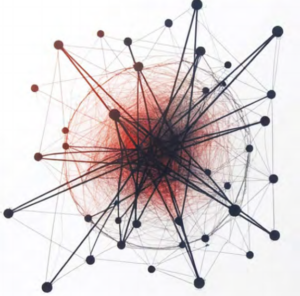
When companies build AI agents that need to access specific information – like your organisation’s documents, knowledge base, or specialised data – they typically use what’s called a vector-based retrieval system. The idea is simple: convert both the user’s query and all documents into mathematical vectors, then find the documents whose vectors are most similar to the query vector.
This technique, often called retrieval-augmented generation (RAG), works impressively well in demos and controlled settings. But what happens when we scale to real-world conditions?
Research by EyeLevel.ai reveals a startling reality: vector-based retrieval accuracy drops by up to 12% when scaled to just 100,000 pages – a tiny fraction of the data that enterprise systems regularly handle. Their alternative approach, which doesn’t rely exclusively on vector similarity, maintained much better performance with only a 2% degradation at the same scale.
Why does this happen? The culprits are fundamental mathematical limitations:
The curse of dimensionality: As vector spaces grow, distance metrics become less meaningful
Vector space crowding: Semantically different concepts end up occupying similar regions in vector space
Encoder limitations: Current models struggle to capture nuanced semantic distinctions at scale
For an AI agent trying to make decisions based on your company’s data, this degradation isn’t just an inconvenience – it’s potentially catastrophic. An agent that misses 12% of relevant information could miss critical context for important decisions.
THE ASSOCIATIVITY GAP: WHEN CONNECTING DOTS BECOMES IMPOSSIBLEPerhaps even more concerning is what researchers call the ‘associativity gap’ – the inability of vectorbased systems to form transitive relationships across multiple documents.
Here’s a simple example: Document A establishes that Project X depends on Component Y. Document B mentions that Component Y is experiencing supply chain delays. A human would immediately connect these dots and realise Project X is at risk. But vectorbased retrieval systems struggle with this kind of reasoning.
Why? Because vector similarity primarily identifies direct matches, not logical connections. When information is distributed across separate entries in a knowledge base, vector similarity alone fails to construct the logical chain, preventing AI agents from making crucial inferential leaps.
This limitation directly undermines one of the most valuable potential capabilities of agents: making connections across domains that might not be obvious even to specialised human experts.
THE LINGUISTIC VARIATION PROBLEM: WHEN SPEAKING DIFFERENTLY BREAKS YOUR AIAnother surprising vulnerability emerges when we look at how these systems handle linguistic variations – the natural differences in how humans express themselves.
Research on the Fragility to Linguistic Variation demonstrates that minor variations in query formulation can cause up to 40.41% drops in retrieval performance. Even small changes in formality, readability, politeness, or grammatical correctness significantly degrade system performance.
For example, asking ‘What’s the capital of France?’ versus ‘Could you kindly tell me the capital city of France, please?’ should produce identical results, but often doesn’t in current systems. These errors cascade from the retrieval component to the generation component, making RAG systems particularly vulnerable to the natural linguistic diversity present in real-world interactions.
For agents designed to serve diverse user populations, this represents a fundamental accessibility problem.
THE LONG CONTEXT ILLUSION: WHY MORE TOKENS DOESN’T MEAN BETTER UNDERSTANDINGMany have proposed that expanding context windows – allowing AI models to process tens or hundreds of thousands of tokens at once – could solve these retrieval problems by simply feeding entire documents directly into the model.
But research using the NOLIMA benchmark reveals that even state-of-the-art models like GPT-4O show dramatic performance degradation in longer contexts, dropping from 99.3% accuracy to 69.7% at just 32K tokens. This degradation becomes even more pronounced when models must perform non-literal matching or handle distracting information.
The problem gets worse when models need to make multi-step connections. In the research, two-hop reasoning tasks (requiring connecting multiple pieces of information) showed especially severe performance drops as context length increased.
Simply put, dumping more information into a longer context window doesn’t solve the fundamental limitations in how these models process and connect information.
These findings have profound implications for anyone working on autonomous AI agents. Let’s consider how these limitations impact key agent capabilities:
When an agent cannot reliably trace causal chains or logical dependencies across multiple documents, it cannot effectively decompose goals into coherent action sequences. This fundamentally undermines the agent’s ability to formulate complex, multi-step plans – a core requirement for meaningful agency.
Agents relying on these technologies might appear competent on simple tasks but would fail catastrophically when faced with complex planning scenarios requiring information synthesis.
Agentic systems need ‘working memory’ to maintain understanding across interactions. The identified ‘contextual amnesia’ problem in vector-based systems prevents agents from reliably integrating historical context with present situations.
For agents, this means an inability to maintain consistent understanding across conversations or tasks with varying linguistic styles – a fatal flaw for systems meant to serve diverse users or operate in environments where information is expressed in different ways over time.
In enterpris e environments, the ‘knowledge isolation’ problem manifests as an inability to connect information across organisational boundaries. A truly autonomous agent would need to recognise, for instance, that a production delay (manufacturing domain) affects financial projections (finance domain).
Vector-based systems struggle with these connections because these domains exist in different semantic spaces. This directly undermines one of the most valuable potential capabilities of agents: making cross-domain connections that might not be obvious to specialised human experts.
Perhaps most concerning is how the se limitations compound in uncertain or ambiguous scenarios. The research shows that vector-based retrieval is highly vulnerable to distracting information that shares keywords with the query but is semantically irrelevant.
This vulnerability becomes particularly problematic as context length increases – precisely the scenario where agents would theoretically benefit most from expanded context windows.
So if current approaches have these fundamental limitations, what alternatives might offer a more promising path forward? Several approaches show potential:
Several researchers suggest that structured data modelling approaches (like knowledge graphs) might address many limitations of vector-based systems. By explicitly representing entities and relationships, these approaches enable more reliable complex reasoning and are less sensitive to linguistic variations.
When information is structured as entities and relationships rather than raw text, the system can focus on the underlying meaning rather than surfacelevel word similarities.
Combining vector-based retrieval with structured knowledge representation likely offers more robust foundations for agency than either approach alone. The vector component provides flexibility and broad coverage, while the structured component enables reliable reasoning across domains.
The development of retrieval systems specifically designed to be robust against linguistic variations appears crucial for reliable real-world deployment. This might involve preprocessing queries to standardise format, or using multiple retrieval strategies in parallel.
Perhaps most immediately, we need evaluation methods that specifically test for robustness against linguistic variation, distractor elements, and complex reasoning requirements. Current benchmarks may significantly overstate system capabilities for agentic applications.
The evidence strongly suggests that both vectoronly retrieval and long-context models have significant fragilities that make them problematic foundations for agentic systems. These aren’t simply engineering challenges to be overcome with more data or computing power, but represent fundamental limitations in how these systems process and connect information.
For anyone developing or deploying AI agents, these findings should serve as a reality check. The path to truly capable agents likely requires looking beyond simply scaling existing approaches. It demands fundamentally new ways of representing and reasoning with knowledge – approaches that can handle the associative reasoning, linguistic diversity, and complex planning that human intelligence manages effortlessly.
The good news is that awareness of these limitations opens up opportunities for innovation. By acknowledging the constraints of current approaches, researchers and developers can focus on creating the next generation of AI systems that overcome these fundamental bottlenecks.
The race to build truly capable AI agents isn’t just about who can deploy the largest models or ingest the most data – it’s about who can solve these core reasoning challenges that sit at the heart of artificial intelligence.
